
Imagine a pepper so hot it could make warriors cry. In Trinidad, called Kairi or “Land of the Hummingbird” by its indigenous peoples, this chili sparked every superhot—from Scorpions to Bhut Jolokias to Reapers. But its true name, ají, was the first casualty in a long chain of renames, starting with the colonial slur “devil’s pepper” and echoing through modern hybrids. Born from a family of pepper seeds carried by ancient hands, it was grown, traded, and rebranded across eras, each rename burying its roots deeper. This is the story of the chili that started it all—and the sin of forgetting its name.
The Indigenous Stewards: From Ortoiroid Bringers to Lokono Farmers
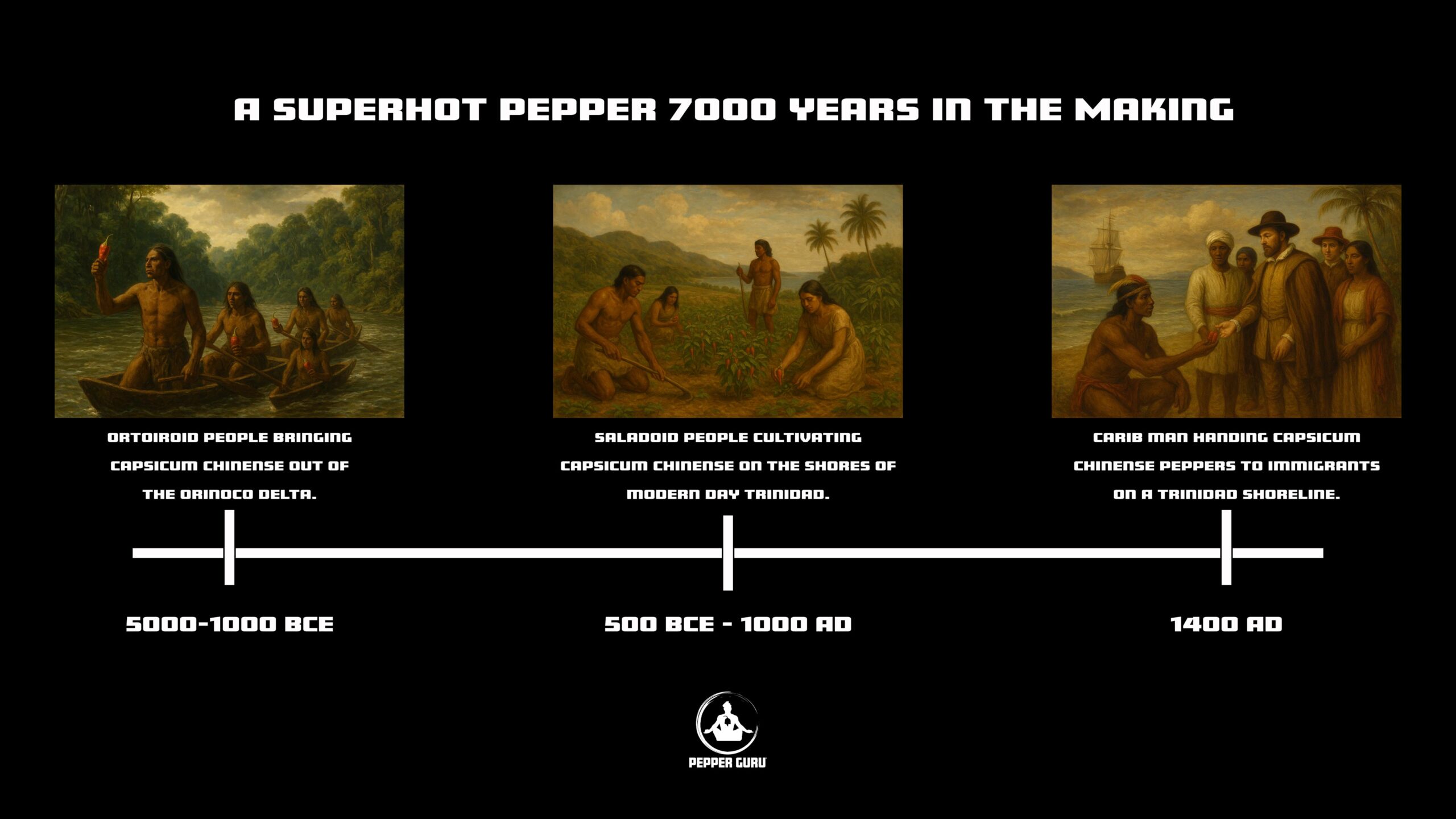
Around 5000 BC, Ortoiroid hunter-gatherers brought chili pepper seeds from the Amazon to Trinidad’s islands. At sites like Banwari Trace and St. John’s—Trinidad’s oldest archaeological deposits, dating to ~5500 BC—they processed these spicy fruits alongside shellfish and early horticultural tools, marking the first foothold of Capsicum in the Caribbean.
By 500 BC, Lokono farmers from the Orinoco Delta arrived. They grew peppers in fields with cassava, perfecting wrinkled, fiery varieties through selective cultivation in mounded conucos. They traded these across the Caribbean, spreading the superhot chili’s roots under its simple name: ají, the Arawak word for the sacred fruit that fueled their world—a family of phenotypes, from milder forms to blistering wrinkly superhots, hybridized naturally through trade and selection long before colonial eyes arrived.
Colonial powers erased this language, imposing the mocking “devil’s pepper” by the 1850s—a rename born of fear and control, wielded by descendants of enslaved Africans and indentured Indians to describe the sweat it summoned. This wasn’t just a new label; it was the original sin, veiling indigenous ingenuity in infernal myth.
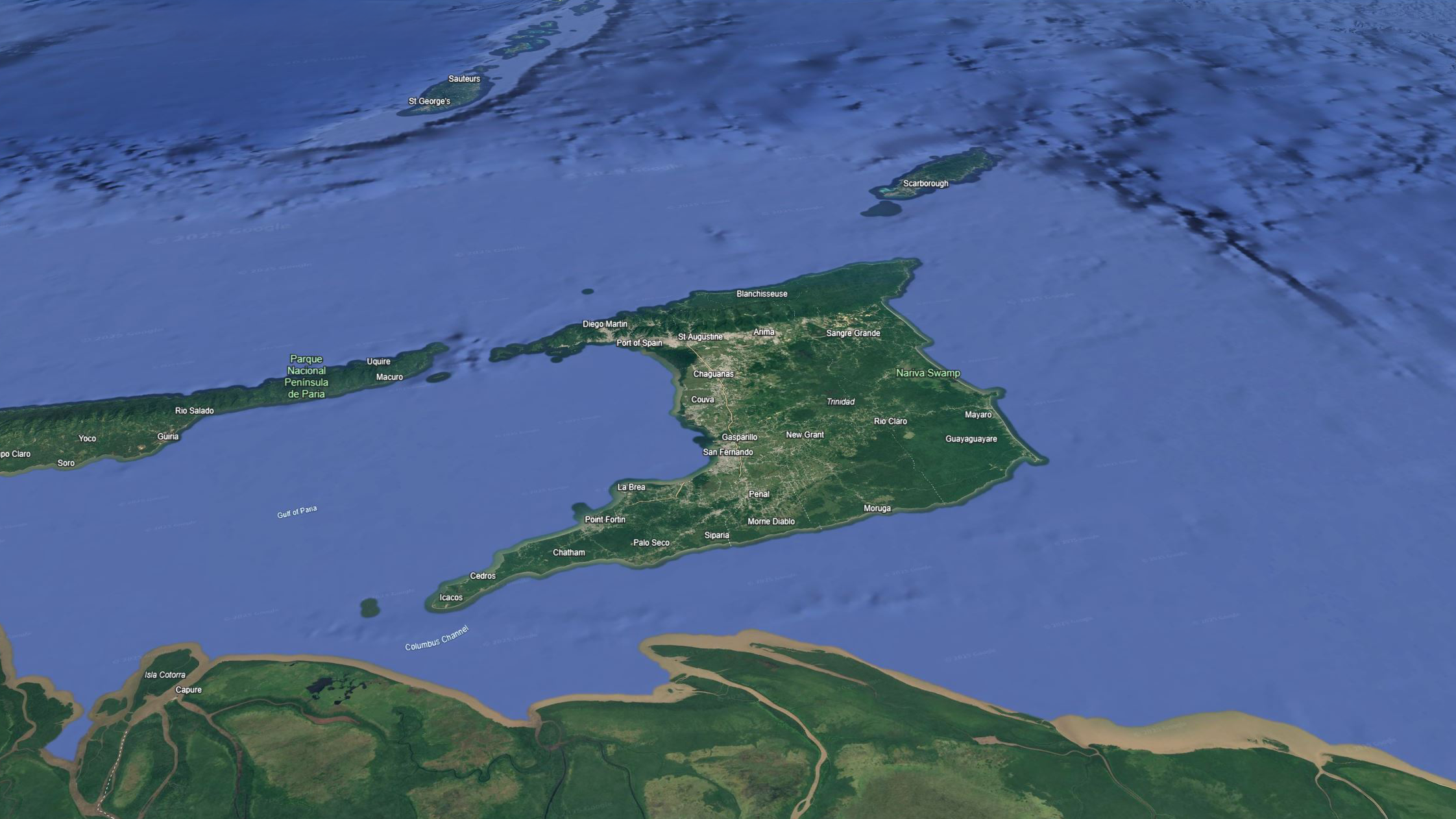
Ground Zero: Trinidad & Tobago
Every superhot chili traces to Trinidad and Tobago, where Ortoiroid migrants planted the seed and Lokono farmers cultivated it in Kairi’s rich soil. Long before branded variants like Moruga Scorpion or 7 Pot, it thrived unnamed in backyards and villages, its heat a quiet constant.
By the 1800s, the “devil’s pepper” rename took hold, a colonial echo that turned awe into dread. Echoes of its pre-rename pungency surfaced in the 1990s, when University of the West Indies (UWI) researchers first scientifically tested unnamed ‘scorpion peppers’ from northern Trinidad farmers—confirming their extreme heat potential well before international recognition.
Even now, Wikipedia’s sole mention of a “Wahid Ogeer” as the yellow cultivar’s creator falls flat—a Chaguanas farmer miles from Moruga, unknown to locals there, another lazy rename handing credit to shadows instead of the real growers.
Shape as a Genetic Fingerprint
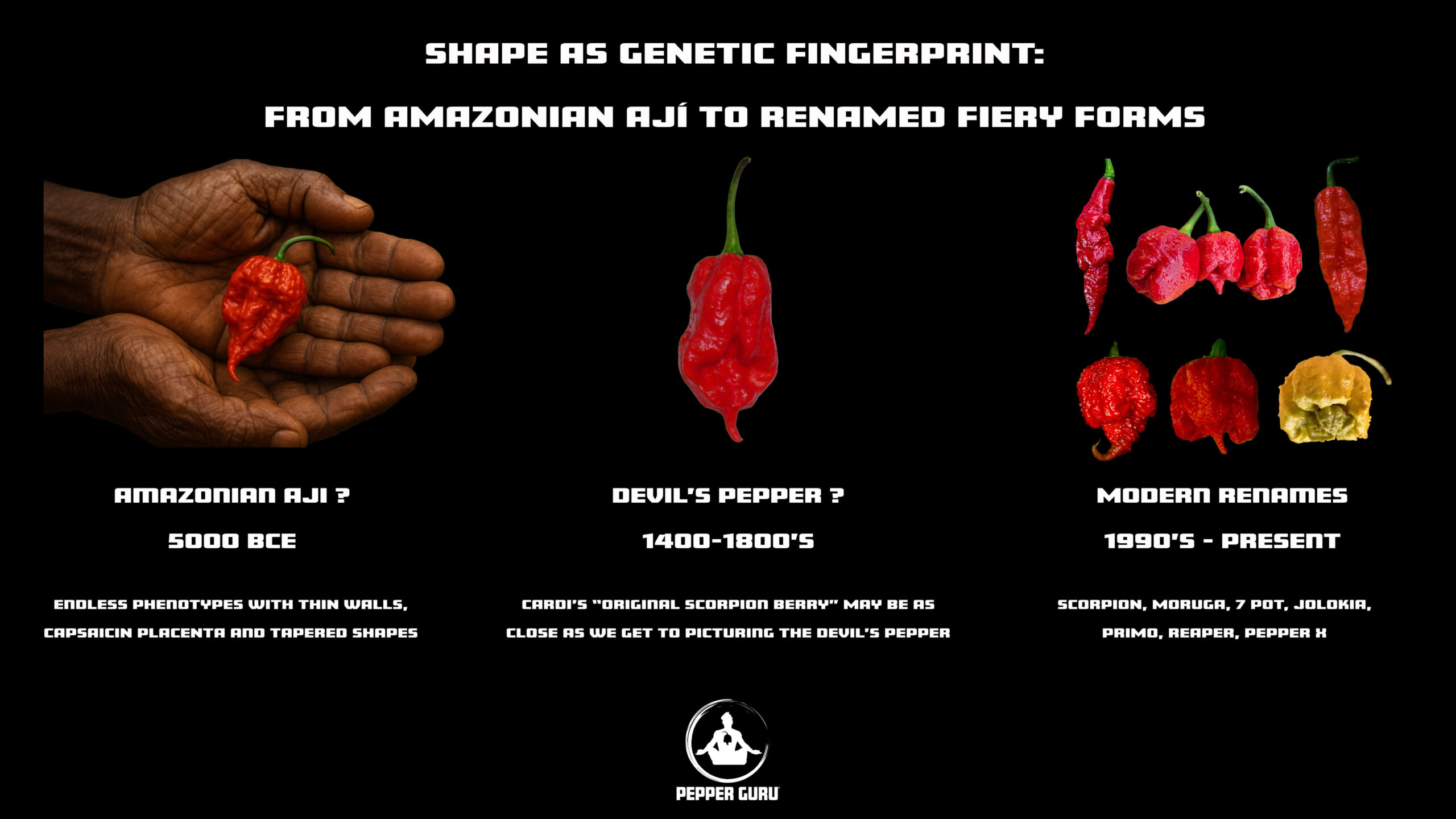
Superhot peppers share distinct traits—thin, wrinkled walls, capsaicin-packed placenta, and pointed, tapered shapes. All traits pointing to a shared lineage. The CARDI Trinidad Scorpion’s “stinger” tail haunts the Bhut Jolokia, sans its subtle tip “nipple.”
The Seven Pod and Moruga Scorpion introduce rounder forms, perhaps from crosses with milder Scotch Bonnet shapes—or the vaguely renamed “Congo pepper,” Trinidad slang for any blistering habanero, a nested mystery hiding yet more forgotten origins.
These are fingerprints from the Amazonian ají, carried by indigenous peoples and diversified through Caribbean evolution. Each rename—Devil’s Pepper, Scorpion, Moruga, 7 Pot, Jolokia, Primo, Reaper, Pepper X—merely redrapes the same fiery form, a genetic thread rooted in indigenous origin.
Lord Harris and the Journey to India
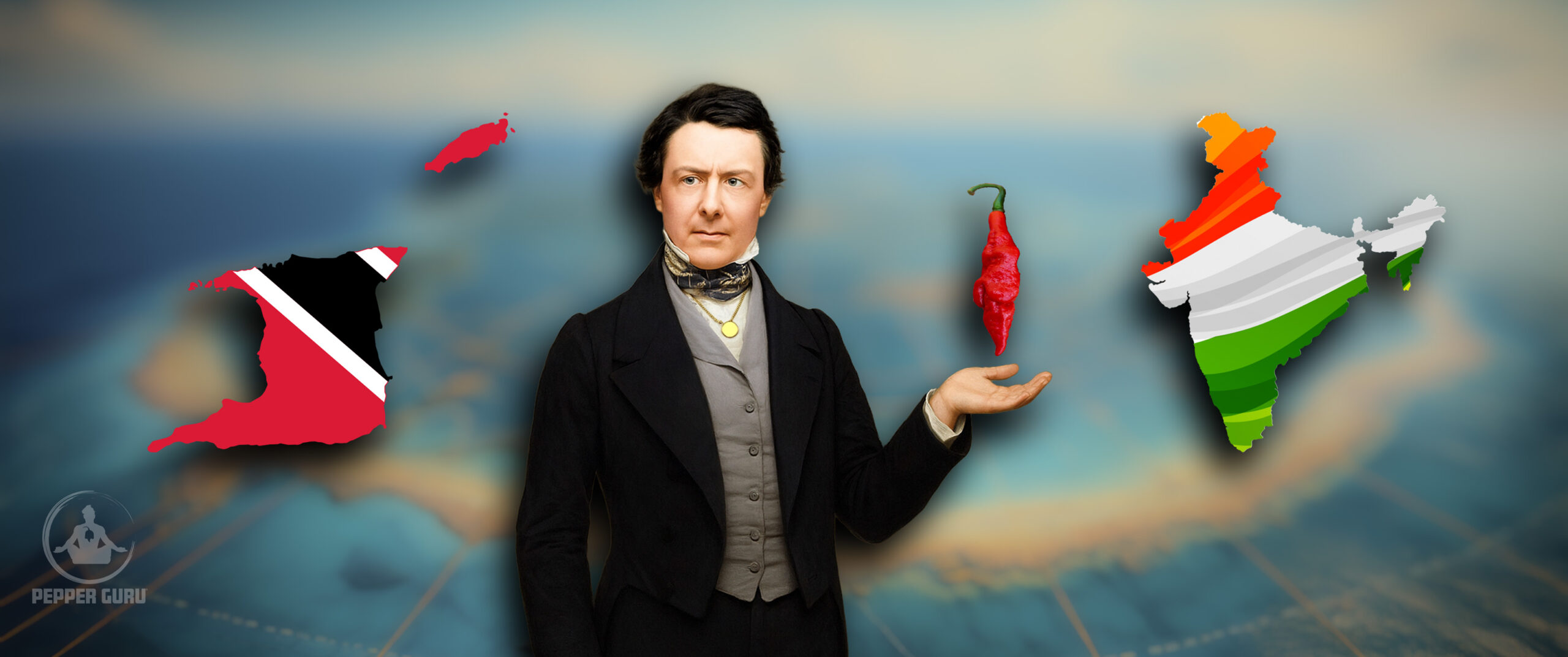
In the 1840s, Lord Harris, Trinidad’s British governor, carried the “devil’s pepper” to India, perpetuating the sin of renaming. Edward Balfour’s 1871 Cyclopædia of India captures it: “One species called ‘devil’s pepper,’ introduced by Lord Harris from Trinidad, is so intensely hot that the natives can hardly manage to use it.”
While this introduction added to local chili diversity in India, genetic and ethnobotanical evidence shows that Naga-type peppers were already being cultivated for generations by tribal communities in Northeast India and the Myanmar borderlands long before Harris.
Harris’s act wasn’t creation but commodification — another layer of erasure. Later popularized by Dave DeWitt as the origin story of the Ghost Pepper, it added fuel to the renaming hype. Meanwhile, the ají’s deeper indigenous story trailed behind, often lost in transit like so many seeds carried across centuries and oceans.
The Forum Years: When Legends Collided
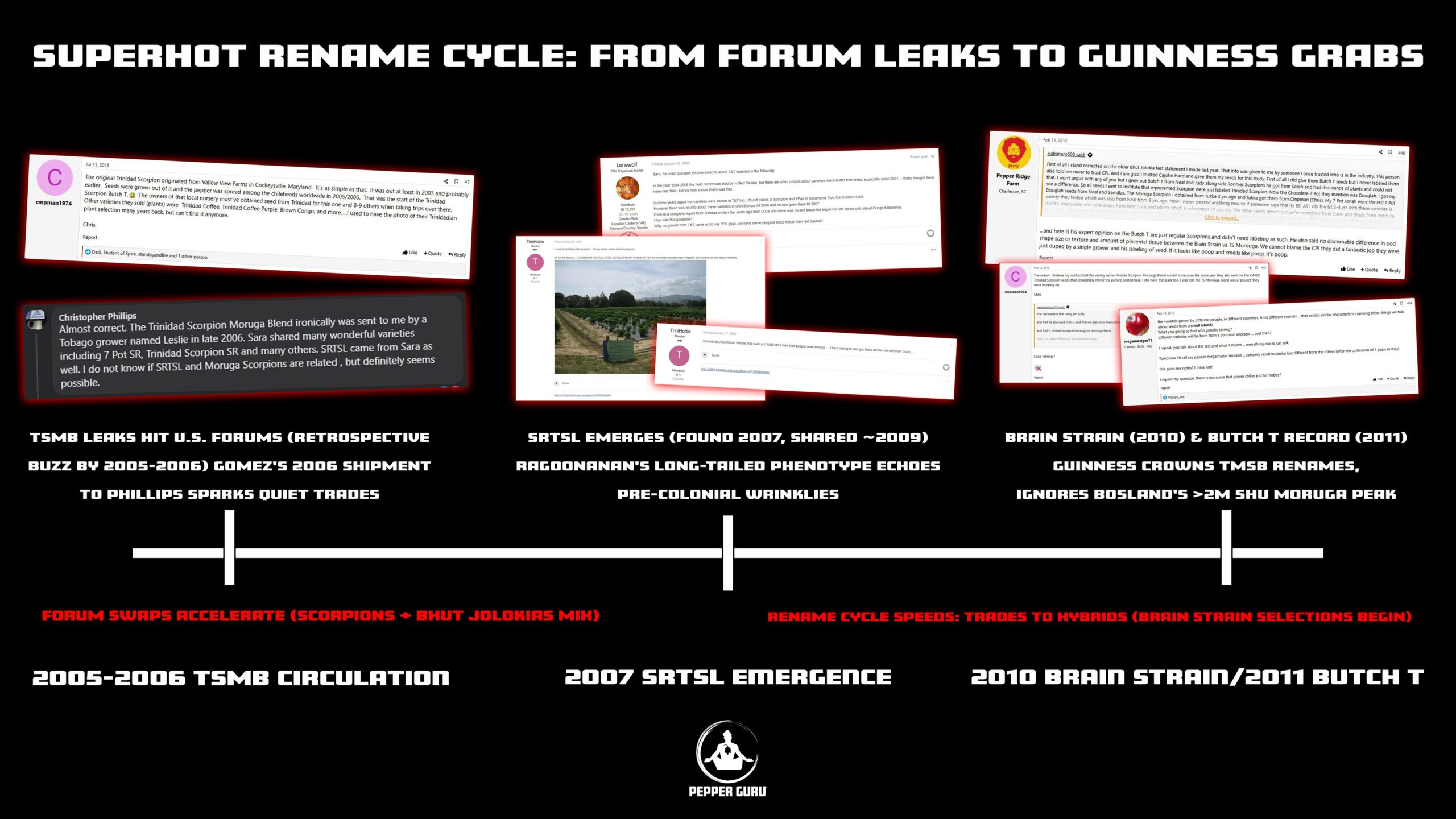
By the 2000s, online forums connected chili enthusiasts, who swapped seeds of Trinidad’s Scorpions, Morugas, and 7 Pots with India’s Bhut Jolokias.
Growers tracked results and debated heat levels, glimpsing the shared Caribbean root. But the timeline runs deeper—this renaming game has been going on for a long time. The internet just made it easier to connect and trade mailing addresses, accelerating the cycle.
The original Trinidad Scorpion was named at Valley View Farms In Cockeysville, Maryland in 2003, possibly even earlier. The owners often brought back seeds from their trips to Trinidad. They also sold Trinidad Coffee, Trinidad Coffee Purple, Brown Congo and more. Some say this was the start of the Trinidad Scorpion Butch T.
Seeds of the Trinidad Scorpion Moruga Blend (TSMB)—a mix of gnarly, rounder, tailed “project peppers”—circulated U.S. forums retrospectively by 2005-2006, its true spark in late 2006 when Tobago grower Leslie Gomez shipped the original batch to Christopher Phillips (a detail echoed in grower lore).
That blended “project pepper”, spread quietly from Phillips to breeders worldwide, became the nameless foundation for modern icons—even before hybrids like Sara Ragoonanan’s Trinidad Scorpions and 7 Pots emerged in 2007, with her first forum shares around 2009, a phenotype echoing pre-colonial wrinkly superhot diversity.
Brain Strain lines, with their wrinkled “brain” pods echoing Amazonian forebears, emerged around 2010 via early seed companies, predating Guinness chases.
The ‘Moruga Scorpion’ wasn’t created by any one or two humans. It was part of a 5,000-year continuum of Caribbean chinense evolution and hybridization. Whether SRTSL was an ancient phenotype or a newer recombination of old Trinidad genetics, the building blocks behind modern superhots existed long before the 2000s.
There were many “Scorpions” before that name was ever muttered by any English or Spanish speaker—regional tags by colonials and immigrants, much like “devil’s pepper” before them.
Butch T is essentially a selected Trinidad Scorpion line — likely from the same forum-traded material (including Valley View Farms stock) that fed into Moruga blends years before its 2011 record. While Guinness crowned it based on a submitted 1.46M SHU test, Bosland’s subsequent replicated trials on related Moruga Scorpion plants documented individual fruits exceeding 2 million SHU.
The superhot arms race didn’t start in the early 2000s—this has been going on for a long time, each swap a small sin in the grand renaming.
The Modern Cultivar Boom
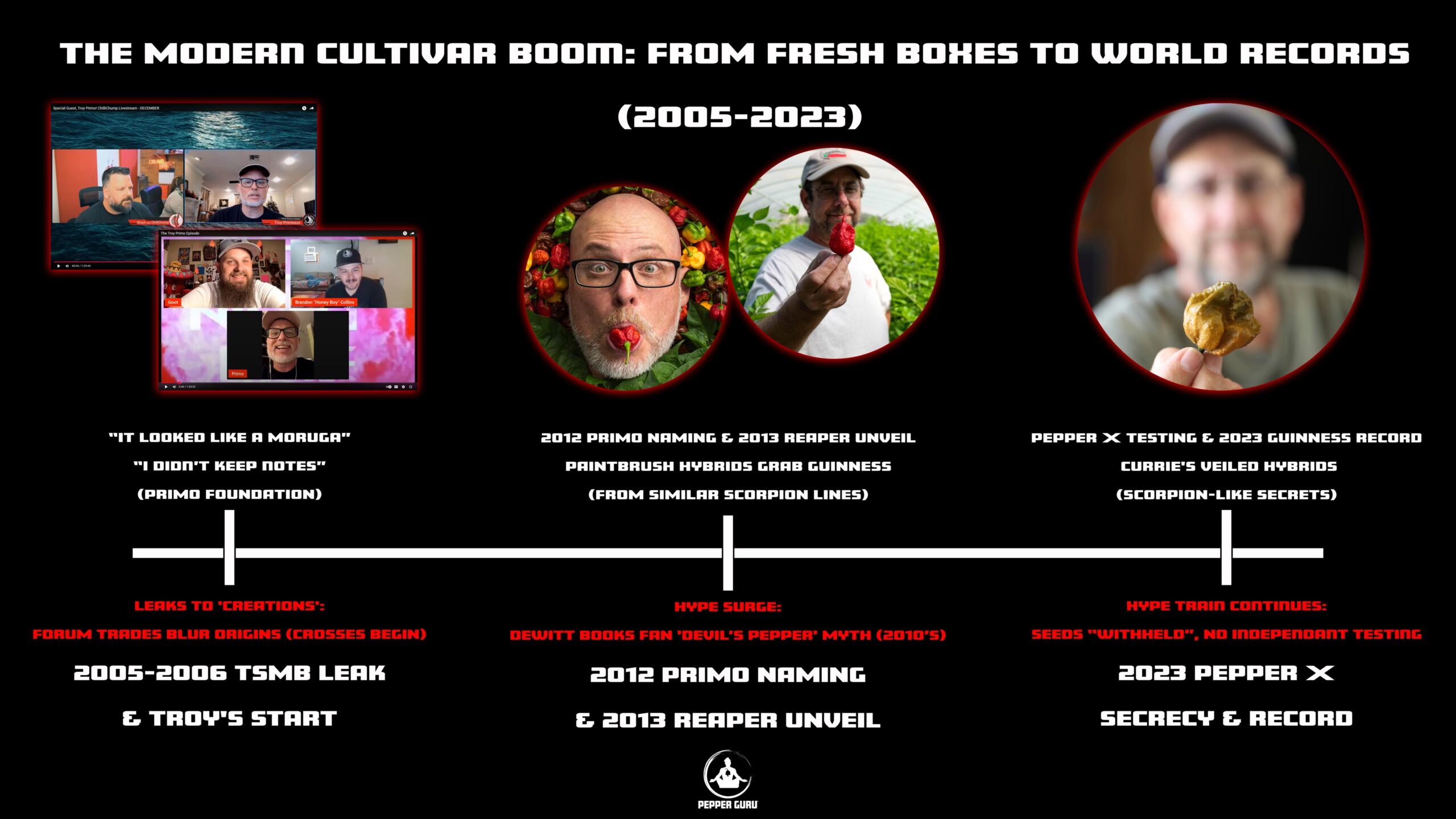
The internet fueled a surge in new chili varieties, where names like Primo, Reaper and Pepper X vied for Guinness records, each a fresh rename chasing profit.
Dave DeWitt amplified “devil’s pepper” in his 2010s books, fanning the hype. Beneath the branding, the core endures: An ancient ají, shaped by Ortoiroid and Lokono hands, drives every superhot variety. No lab or false claims of breeding needed.
Refinements like Troy Primeaux’s 7 Pot selections (likely from Gomez’s 2006 TSMB via Phillips, named “Primo”) and Ed Currie’s paintbrush hybrids (on similar scorpion lines, unveiled as “Carolina Reaper” in 2013) built on those leaks, evolving through migrations from Orinoco deltas to forum “creations”.
These modern monikers? Just echoes of the original sin, commodifying a pepper that never needed a name. This left real Trinidadian breeders who spent generations crossing 7 Pots and Congo peppers, with zero credit from ministries or markets.
Their unreleased hybrids gathering dust in the eyes of the internet, but always doing well at the local market. A quiet rebuke to the theft that brought the islands their 5 minutes of fame in the superhot limelight of the early 2000’s.
The Payoff: The Pepper That Started It All
So, where does that leave us?
Every superhot chili from Scorpion to Reaper owes much of its heat to the rich Capsicum diversity of the indigenous Caribbean, especially in Kairi (Trinidad). Colonizers renamed and carried these peppers across the world, adding new names and stories wherever they landed. Yet the Bhut Jolokia and Naga peppers of Northeast India and Myanmar developed their own deep roots among tribal communities long before the 1850s introduction.
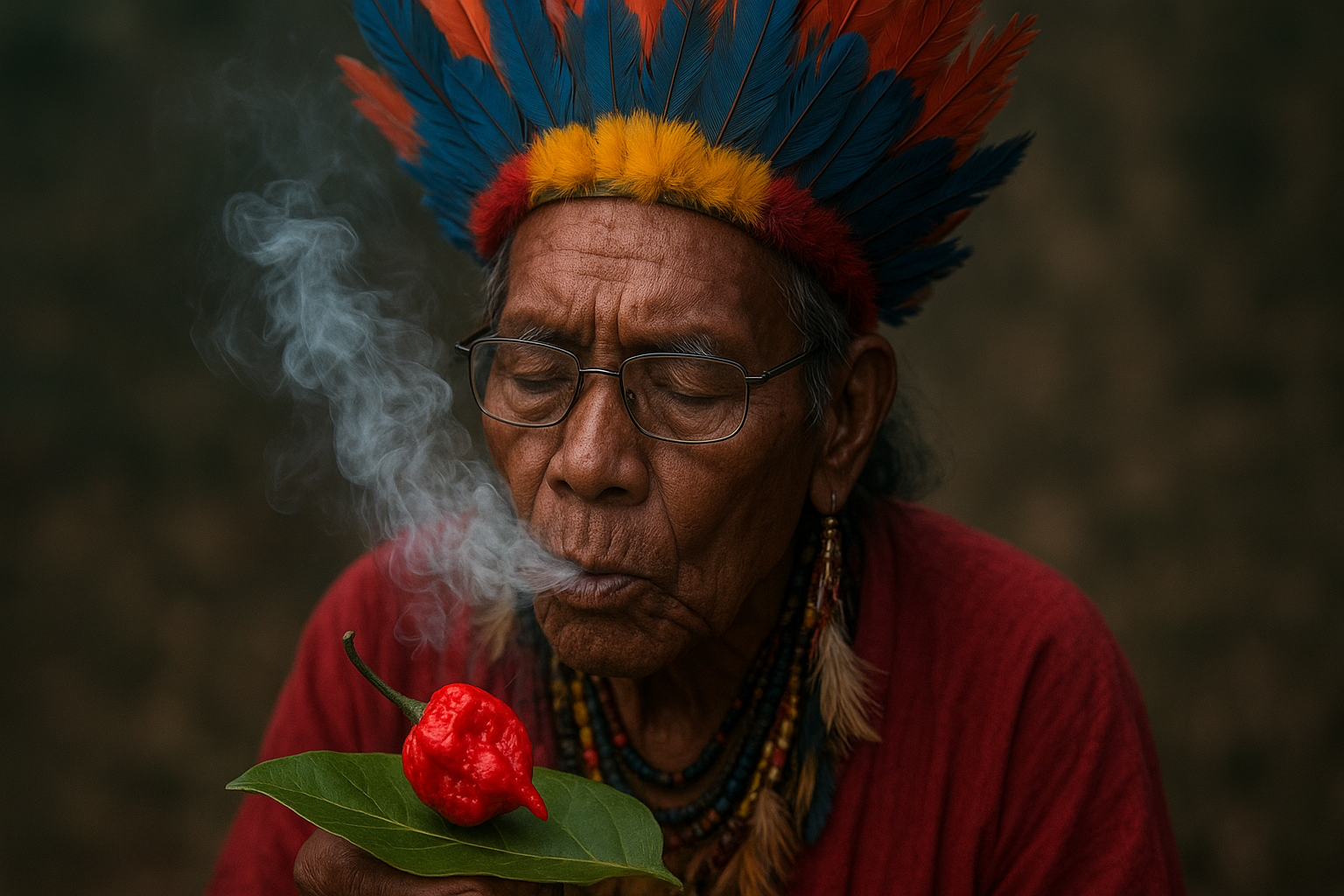
Ortoiroid peoples were among the first to settle these islands, Lokono (Arawak) and other Indigenous farmers later cultivated peppers, colonials twisted their names, and modern breeders continue to rebrand their descendants.
In Arima, the Santa Rosa First Peoples Community—led since the 1970s by descendants with Kalinago and Arawak heritage—keeps this Caribbean legacy alive. They grow traditional crops like cassava and honor their ancestors through rituals such as the Smoke Ceremony, preserving deep ties to Trinidad’s Indigenous past.
One day, they may help reclaim the ají’s true story from centuries of renaming. For now, it burns on in gardens, kitchens, and hearts around the world. One fiery seed sparked a global blaze — and a long-overdue reckoning with the sins we’ve sown along the way.
Sources
- Kairi, Land of the Hummingbird
- Capsicum chinense Genetic Studies
- Cyclopædia of India and of Eastern and Southern Asia (1871)
- The Archaic Age of the Caribbean
- Archaic Age Voyaging
- PNAS: Capsicum Domestication in the Americas
- Trinidad Express: Banwari Trace
- Saladoid Migration
- Britannica: Arawak & Lokono
- Library of Congress: Taíno and Arawakan Terms
- PepperScale: Trinidad Scorpion
- Chili Pepper Madness: Bhut Jolokia
- The Origin of Naga Peppers via “Max Burn” on thehotpepper.com
- PepperScale: Moruga Scorpion
- Trinidad Moruga Scorpion’ Pepper > 2 mil SHU
- NCBI: Capsaicin
- Lord Harris
- Fiery Foods Central: Dave DeWitt
- Santa Rosa First Peoples Community Wayback Machine
- Santa Rosa First Peoples Community on Facebook
0 Comments