
Overwintering isn't wrong, it's just not always necessary anymore. Here's why rapid starts are winning in my garden now.
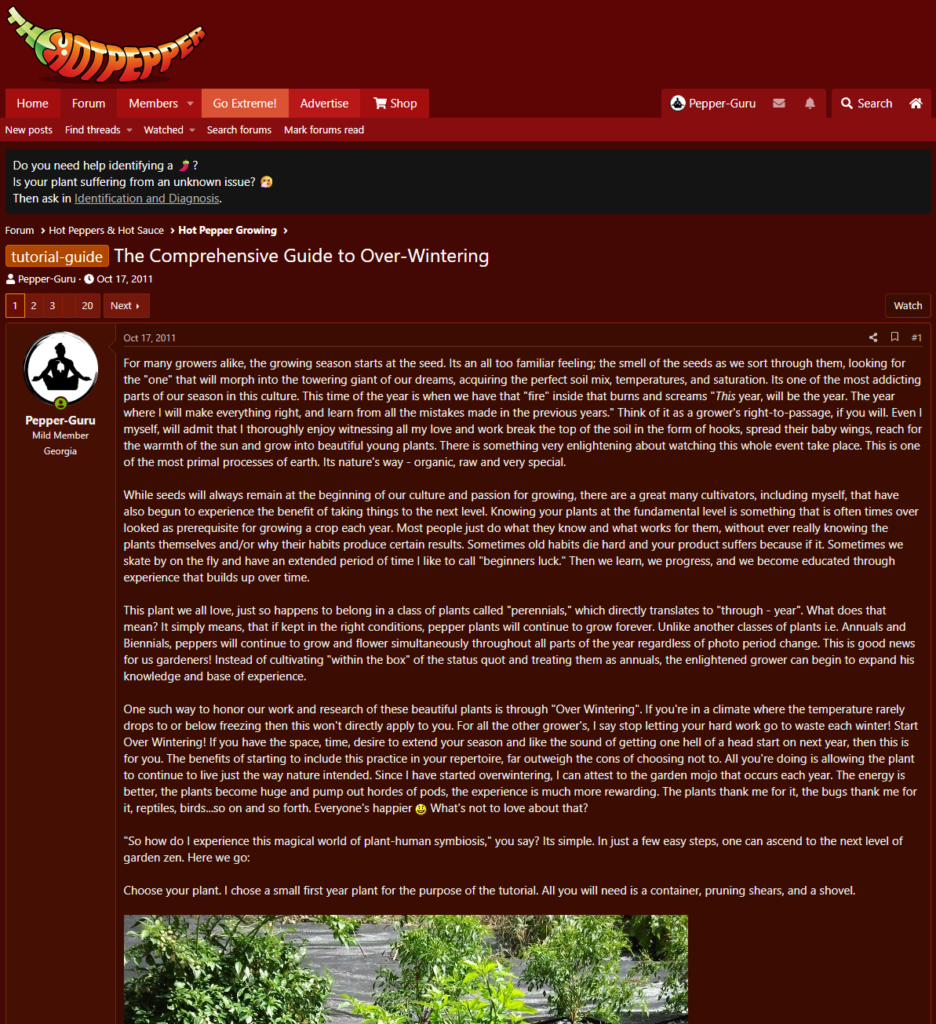
Back in 2011, on thehotpepper.com, I wrote what became "The Comprehensive Guide to Overwintering." It went something like this:
"For many growers alike, the growing season starts at the seed. It's an all too familiar feeling; the smell of the seeds as we sort through them, looking for the 'one' that will morph into the towering giant of our dreams... There is something very enlightening about watching this whole event take place. This is one of the most primal processes of earth. It's nature's way - organic, raw and very special."
I went on to celebrate the perennial nature of Capsicum and how these plants aren't meant to die with the first frost, but to keep growing, flowering, and fruiting if we give them the chance. Overwintering, I argued, was the enlightened path: prune, pot up, bring indoors, and wake up to massive, productive beasts the next spring. The "garden mojo" was real for me. I had huge plants, earlier harvests, hordes of pods, and that deep satisfaction of symbiosis with nature.
That guide still resonates. Fifteen years later, people continue to reference it, share success stories, and use those steps to learn more about their pepper plants over the winter. At over 250k views and hundreds of replies, the original tutorial remains a solid, battle-tested roadmap. But... a lot has changed since 2011.
In the years since, I've pushed myself harder, I've pushed these plants harder and I've watched the pepper-growing world evolve.
Affordable full-spectrum LEDs that approach sunlight intensities have replaced dim windowsills, HID and fluorescents.
Optimized nutrient regimens have proven these plants can fruit at almost every single internode, even as seedlings, rather than waiting months for peppers and "bloom boosters to kick in".
Better soil science education and proactive pest strategies have shrunk the gap between "new start" and "overwintered giant" dramatically.
What once felt like a no-brainer head start now often comes with hidden costs: space hogged all winter, aphid outbreaks in basements, wife yelling all the time, the morale hit of staring at leggy, dormant sticks for months, and the realization that fresh, vigorous plants frequently outperform the survivors in yield, flavor intensity, and overall vigor.
I've grown the same varieties both ways side-by-side. The results surprised me. Rapid-growth fundamentals can deliver that "towering giant" faster, cleaner, and with less hassle than coaxing an overwintered plant back to life. Nature intended peppers to be perennials, sure, but in our controlled gardens, treating them as turbo-charged annuals might honor that potential even more.
In this revisit, we'll honor what worked in 2011, bust some myths I've outgrown, share the hard lessons from failures and triumphs, and explore modern alternatives that might just reignite your grower's fire in fresher ways. Let's go.
What Do I Mean by Overwintering?
Before we go any further, let's establish what I mean by overwintering.
I'm talking about the traditional practice outlined in my 2011 guide: digging up an established pepper plant, cutting back much of its foliage and branching structure, reducing its root system when necessary, and bringing it indoors to survive the winter in a slow-growing state.
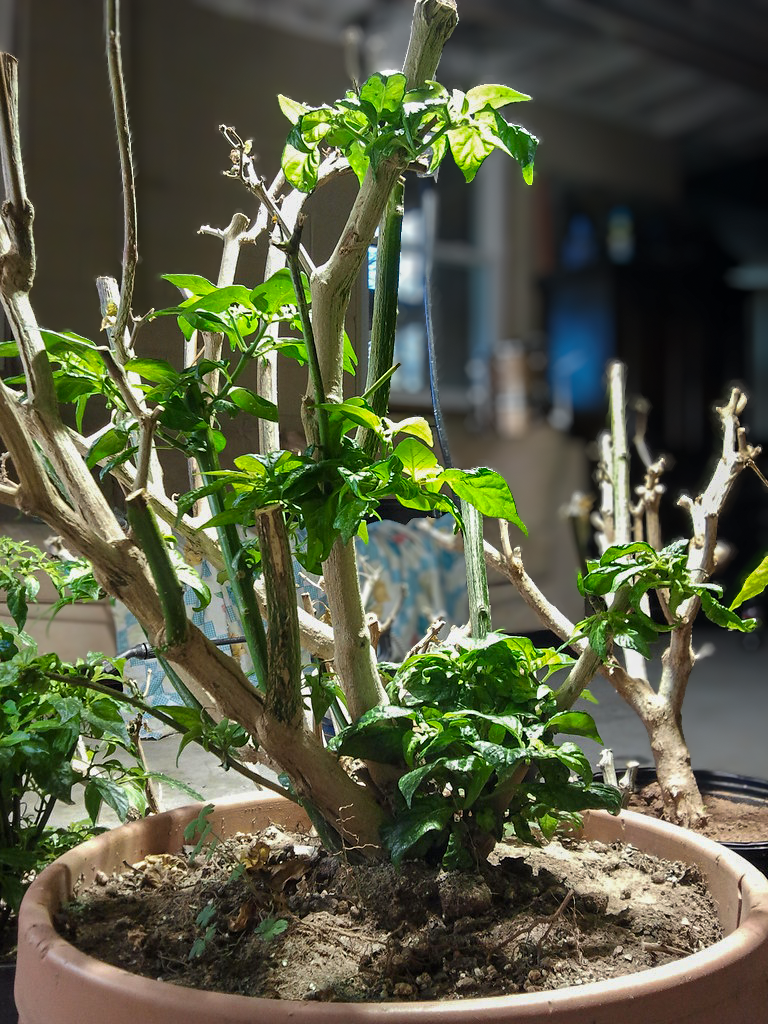
I'm not talking about keeping an intact plant actively growing and producing under powerful lights all winter. Nor am I talking about peppers growing year-round outdoors in frost-free climates. Those are entirely different growing scenarios.
This distinction matters. When we compare overwintered plants against fresh starts, we're evaluating whether the traditional process of cutting back, preserving, and reviving an established plant actually delivers the growth and yield advantages so often attributed to it.
So, Is Overwintering Worth It?
It can be. But first, ask yourself a few questions. What are your goals? What assumptions are you making? And what happens if overwintering doesn't deliver what you're after?
If your goal is simply to learn more about growing peppers beyond the traditional season, overwintering is a great way to do it.
Maybe the first frost is approaching, and your plants are still loaded with unripe peppers. Bringing them indoors can save that final harvest and buy you a little more time.
Or maybe you've found the perfect pepper. The flavor, heat, shape, and productivity are exactly what you want. Why risk losing it?
Keeping a mother plant allows you to preserve that exact genotype rather than gamble on next year's seedlings. Traits can vary considerably from one filial generation to the next, especially in unstable lines. Overwintering lets you keep producing the pepper you fell in love with, year after year.
Then there are the plants you simply can't replace. Maybe it's a rare wild Capsicum species you spent years tracking down, a difficult-to-germinate accession, or a specimen collected from a remote habitat you'll likely never visit again. Seeds may be scarce, unreliable, or unavailable altogether. In these cases, overwintering isn't about getting a head start on next season. It's about keeping something alive that you may never get another chance to grow.
But what if your only goal is a bigger, healthier, more productive plant next season?
Now we're getting into dangerous territory. This is the one that really stirs the pot.
For years, I championed the idea that overwintering gave pepper plants a head start. Bigger plants, earlier harvests, more peppers. I even helped perpetuate that belief in my original 2011 guide.
But back then, I wasn't weighing my harvests. I was looking at enormous plants covered in peppers and assuming they were more productive. I had no reason to question it. Until I did.
As I refined my growing methods, something became increasingly clear. Seed-grown plants, given the right conditions from the start, weren't just catching up to my overwintered plants. They were overtaking them.
And that's where I believe much of the confusion begins.
Most growers have never seen what a pepper plant is truly capable of when its growth isn't limited by inadequate light, poor nutrition, restricted roots, or other environmental factors. They're comparing overwintered plants against seedlings that were never growing anywhere near their potential. I know this because I did it too.
Of course the older plants look impressive by comparison. But is overwintering responsible for that advantage, or are we simply underestimating what a properly grown seedling can accomplish?
I've spent years pushing these plants harder, refining the fundamentals, and measuring the results. What I've found challenges one of the most deeply held beliefs in pepper growing: overwintering doesn't inherently increase yield, accelerate production, or produce larger plants compared with optimally grown fresh starts.
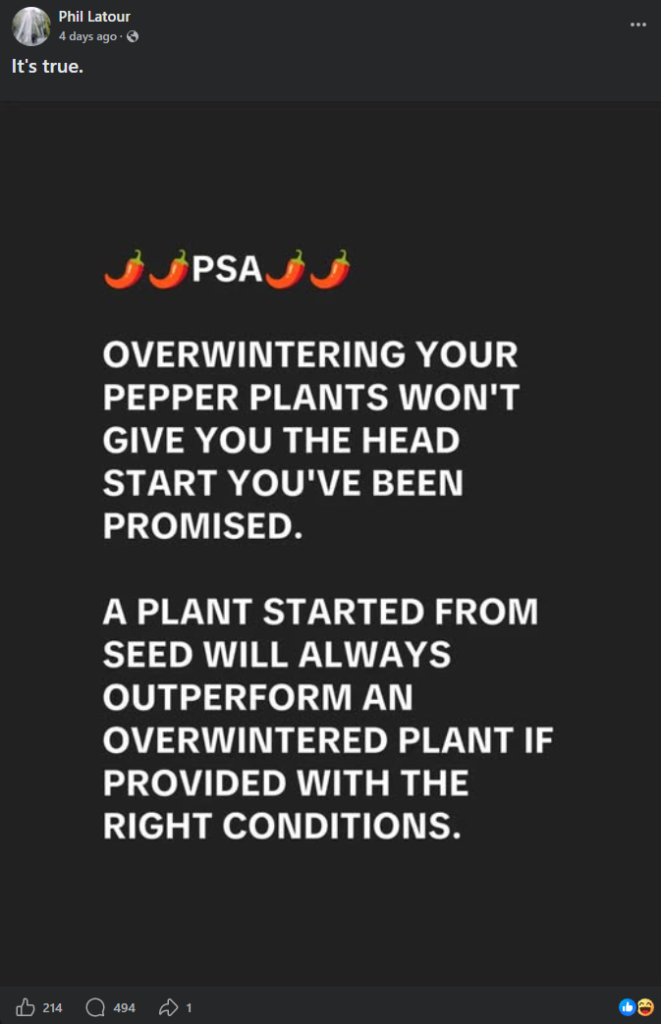
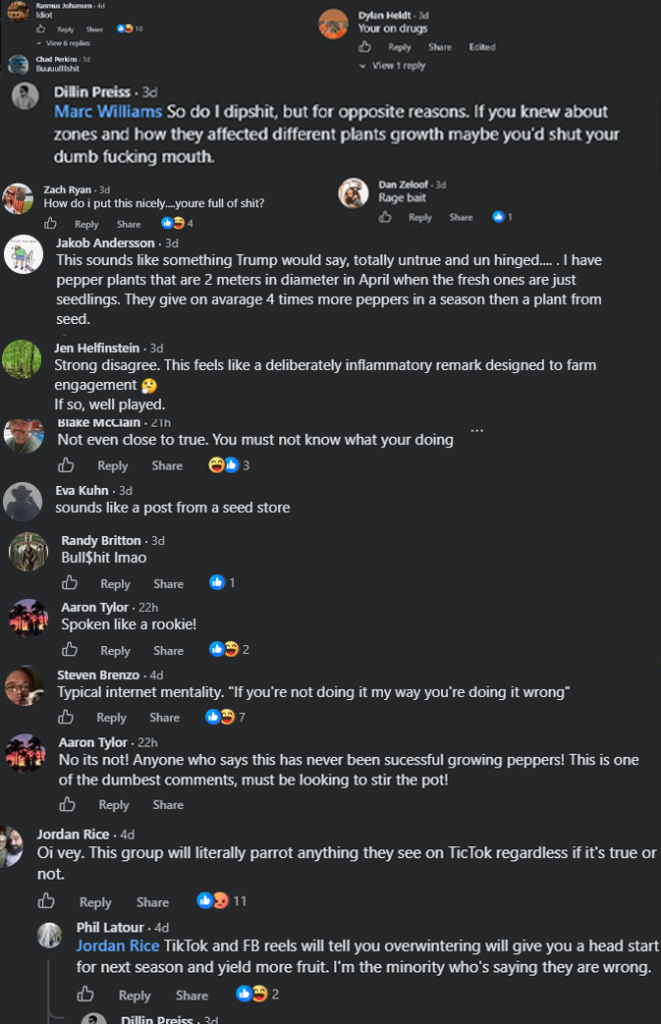
And apparently, questioning the supposed yield advantage of overwintering is enough to start a small war on Facebook.
When Phil Latour shared this statement, the responses came pouring in. Some growers offered thoughtful counterarguments, though most were simply asking for more context. Others shared photos of their multi-year-old plants, but nothing particularly compelling when compared to what Phil, Brian Hamilton, and other growers applying modern pepper-growing fundamentals have achieved.
A shocking number went straight for the personal insults. Par for the course on the internet these days.
But something was missing from nearly every argument.
Actual yield comparisons.
Not photos of what someone considered a "big plant." Not stories about how many peppers they picked from their six-year-old Reaper.
I'm talking about total harvested fruit weight compared against a properly grown first-year plant under similar conditions.
Not even optimal conditions. Just comparable ones.
That's the comparison that matters if we're claiming overwintering increases yield.
The Hidden Costs Of Keeping a Plant Alive
Space
Space is valuable. Most new growers hesitate to start more than a few seeds of any one cultivar, even when growing extras is a smart way to hedge against accidental crosses or poor germination. Why? They simply don't have the room.
Overwintering demands even more of it.
Even when you cut plants back to little more than woody stumps and keep them semi-dormant in less-than-ideal conditions, they still occupy more space than a tray of seedlings. And if you plan to keep them actively growing, flowering, and producing peppers all winter? You'll need considerably more room.
All that space, just to keep last year's plants alive.
Pests
No matter how careful you are, bringing outdoor plants inside means risking a few unwanted guests. Pests hide in the soil, on the leaves, and in places you'd never think to look.
You can wash every bit of soil from the roots. You can dunk entire plants in pesticides. Chances are, something will survive. An aphid, a mite, a few eggs. It doesn't take much.
Outdoors, natural predators help keep pest populations in check. Bring those same pests indoors, away from their predators, and you've given them a safe place to reproduce. Fast.
Once an infestation takes hold, keeping it under control can become a battle of its own. More pesticides, beneficial insects, repeated treatments, and time spent fighting pests instead of growing peppers.
All because you wanted to save a plant from the cold.
Maintenance
Bringing plants indoors means bringing the chores with them. Even cut back to little more than rootstocks, they still need water, occasional fertilizer, and enough attention to stay alive. And that's just to keep a few stumps going!
Want to keep full-sized plants actively growing and producing peppers all winter? Expect the costs, labor, and headaches to grow right along with them.
There was a time when my passion for growing outweighed my common sense. I thought I needed to grow peppers year-round, as if taking a few months off was somehow wasting valuable growing time.
Not anymore.
These days, I'd rather spend the winter holidays enjoying time with my family than babysitting pepper plants.
Don't you want a break, too?
Happy Wife, Happy Life
My wife loves peppers almost as much as I do. Know what she doesn't love? Having a bunch of pepper plants in her way when she's trying to do laundry.
Hell, I once built custom tables that took up nearly the entire sunroom of our old apartment. All for pepper plants.
Outdoors, a flourishing pepper plant can be a beautiful addition to the landscape. Lush foliage, colorful fruit, and plenty of ornamental appeal. Indoors? Not so much.
Instead, you've got a collection of unsightly stumps recovering from your latest pruning hack job, battling pests, and taking up valuable living space.
Want to keep your significant other from yelling at you all winter? Maybe stop filling the house with plants you just gotta hold onto.
What's Changed Since 2011? The Rapid Growth Revolution
Light: From Survival to Photosynthetic Saturation
A lot has changed since the early 2000s. Back then, most of us relied on windowsills and fluorescent shop lights. If you were lucky, you had HID lighting. LEDs were just emerging, and they were expensive.
Fast-forward to today. Lighting technology has become cheaper, more efficient, and far more accessible. For what a single HID fixture cost back then, we can now buy multiple high-output LED fixtures capable of delivering light intensities approaching full sunlight, with far less wasted heat and energy.
And that changes everything.
Capsicum is a high-light, day-neutral genus, capable of flowering remarkably early in development. Given the right conditions, plants can begin producing flowers at successive nodes long before reaching anything resembling their mature size.
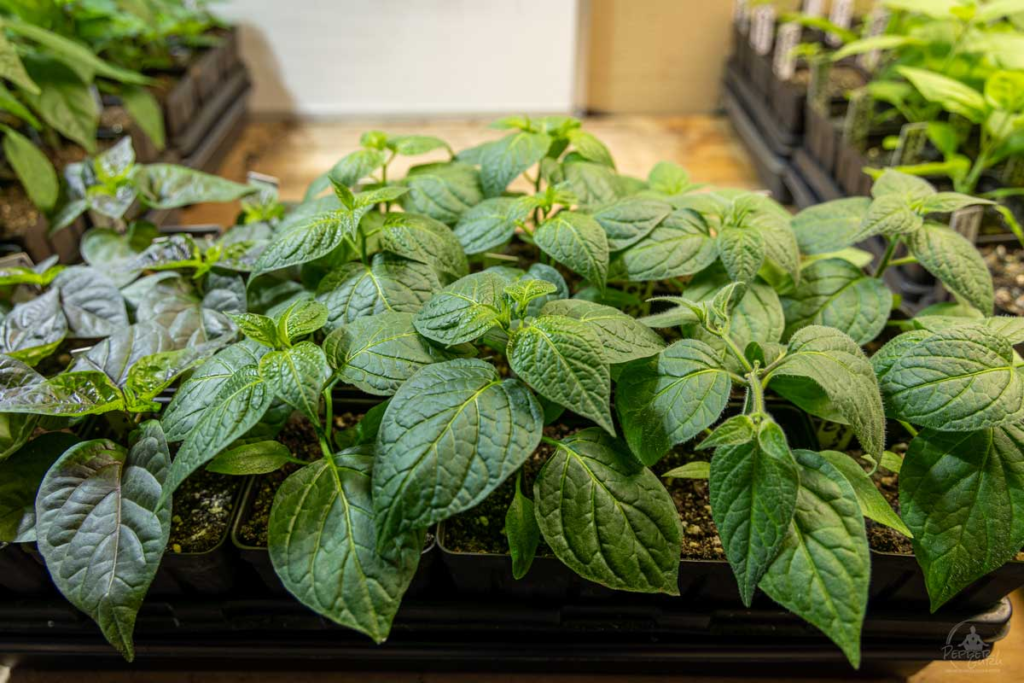
Today, we can grow incredibly lush, transplant-ready seedlings in less than four weeks from the moment a seed gets wet. Some are already developing flower buds before they ever see the garden.
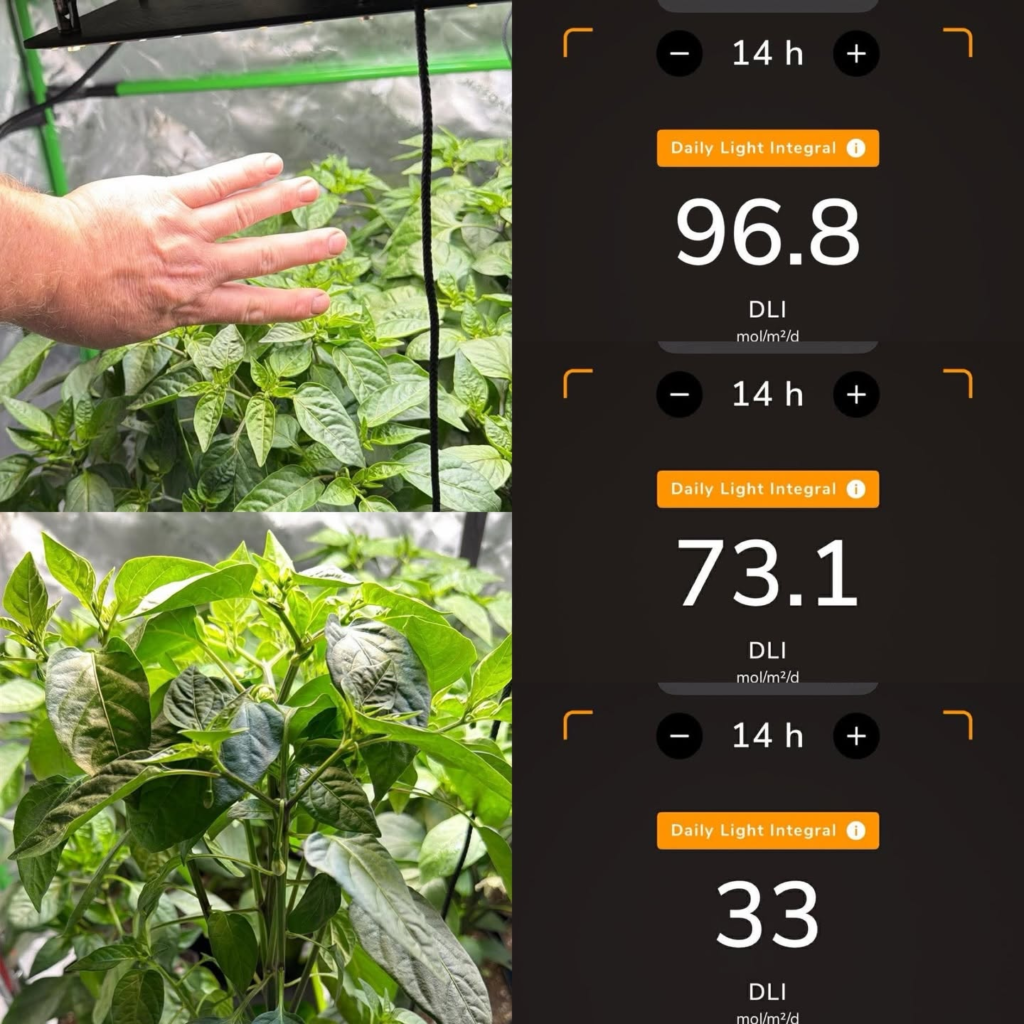
We've also learned just how much light these plants can use. Daily Light Integrals (DLI) of 30 or more are achievable under modern LEDs, and established, well-acclimated plants can tolerate considerably higher levels. Under the right conditions, light is no longer the limiting factor it once was.
And here's the part that still amazes me.
We didn't just discover how much light pepper plants could handle. We discovered just how damn fast they could grow when we finally gave them enough of it.
Nutrition: Outdated NPK Dogma Dies Hard in the Age of Rapid Growth
Pepper growing is plagued by the same dogma found in nearly every corner of horticulture. Back in the early 2000s, much of that advice came straight from the cannabis scene. Frankly, a lot of it still does.
One of the more stubborn holdovers? Fertilizer ratios that aren't particularly well suited to growing peppers.
We now have a much better understanding of plant nutrition. An NPK ratio around 3-1-2 provides a solid foundation for pepper growth, as it does for many other cultivated plants. A balanced, nitrogen-forward fertilizer supports rapid vegetative development while supplying the phosphorus and potassium plants need.
Yet the old "nitrogen is for leaves, phosphorus is for roots, and potassium is for flowers" mentality refuses to die.
Nitrogen isn't just for growing leaves. It's essential to building the photosynthetic machinery, proteins, and new tissue that support vigorous growth and flowering. You can't expect a plant to produce an abundance of flowers without giving it the resources to build and sustain them.
And here's where things get interesting. Even fertilizer trials used to support potassium-heavy feeding programs have reported increases in flower and fruit numbers with increased nitrogen availability. Not potassium. Nitrogen.
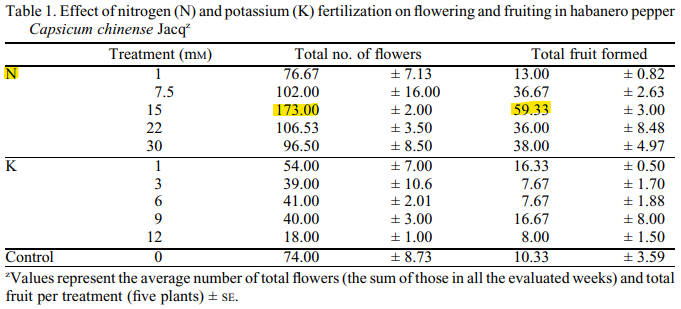
"Nitrogen fertilization significantly increased plant growth and fruit..."
“Potassium fertilization had no positive effects on growth or productivity.”
Think about that. Growers have spent decades chasing higher-potassium bloom formulas, while experimental results have repeatedly demonstrated just how important nitrogen is to building the productive capacity of the plant.
And that's where the bloom-booster crowd gets it backward.
Dumping extra phosphorus and potassium onto a plant doesn't magically create more flowers. Correcting a deficiency can improve performance, but excess nutrients aren't a substitute for balanced nutrition, adequate light, and vigorous growth.
Growers who have moved away from bloom-booster formulas and embraced balanced, nitrogen-forward nutrition are discovering just how productive pepper plants can be without constantly changing fertilizers to chase the next stage of growth.
Optimal Conditions
Every pepper plant belongs to the Capsicum genus, and like any plant, it has environmental conditions under which it performs best.
Some wild species tolerate cooler temperatures than their domesticated relatives, but most cultivated peppers thrive in warm conditions, generally between 65–95°F (18–35°C), with their fastest growth occurring within a narrower range.
You'd be surprised how many growers don't know this. And even when they do, they'll still stick their seedlings in a cold basement or plant them outdoors long before nighttime temperatures are suitable.
Temperature is only part of the equation. Root-zone conditions matter just as much. A well-aerated growing medium, proper moisture management, and healthy roots allow plants to take up the water and nutrients needed to sustain rapid growth. Cold, saturated, poorly aerated roots? You're hitting the brakes before the plant ever gets going.
Once I began paying closer attention to temperature, root-zone moisture, and the conditions these plants actually prefer, their growth rates astonished me.
And that's something I think a lot of growers are missing.
Many have never seen a pepper plant growing anywhere near its potential. They've spent years watching seedlings struggle under inadequate light, cool temperatures, and poorly managed root zones. They have no frame of reference for what's actually possible.
So they conclude that pepper plants are just slow growers.
They're not.
Not when you give them what they ACTUALLY want.
The Race: Rapid Growth vs. Overwintering
There's another factor I rarely see discussed: plant architecture.
A young pepper plant growing under optimal conditions is constantly building new productive tissue. Every developing node represents another opportunity for branching, flowering, and fruit production. As the plant expands, so does its potential to produce.
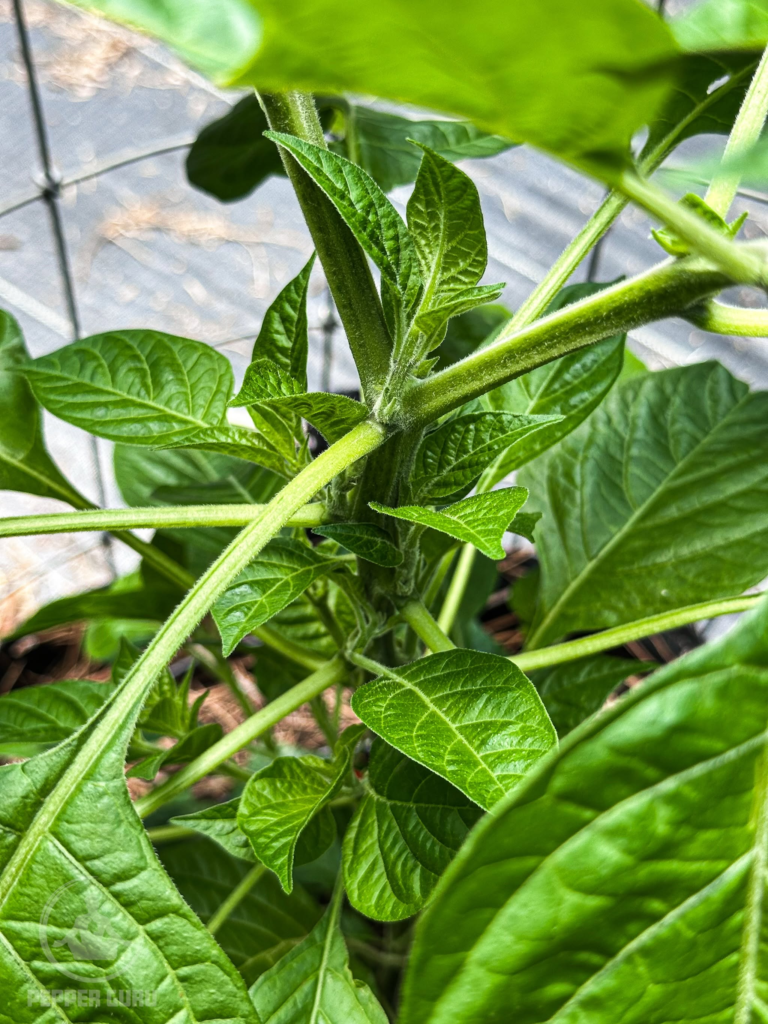
Now consider what happens when we overwinter a mature plant. We often strip away leaves, remove branches, reduce its root system, and leave behind a woody framework. We've removed much of the very structure responsible for producing our harvest.
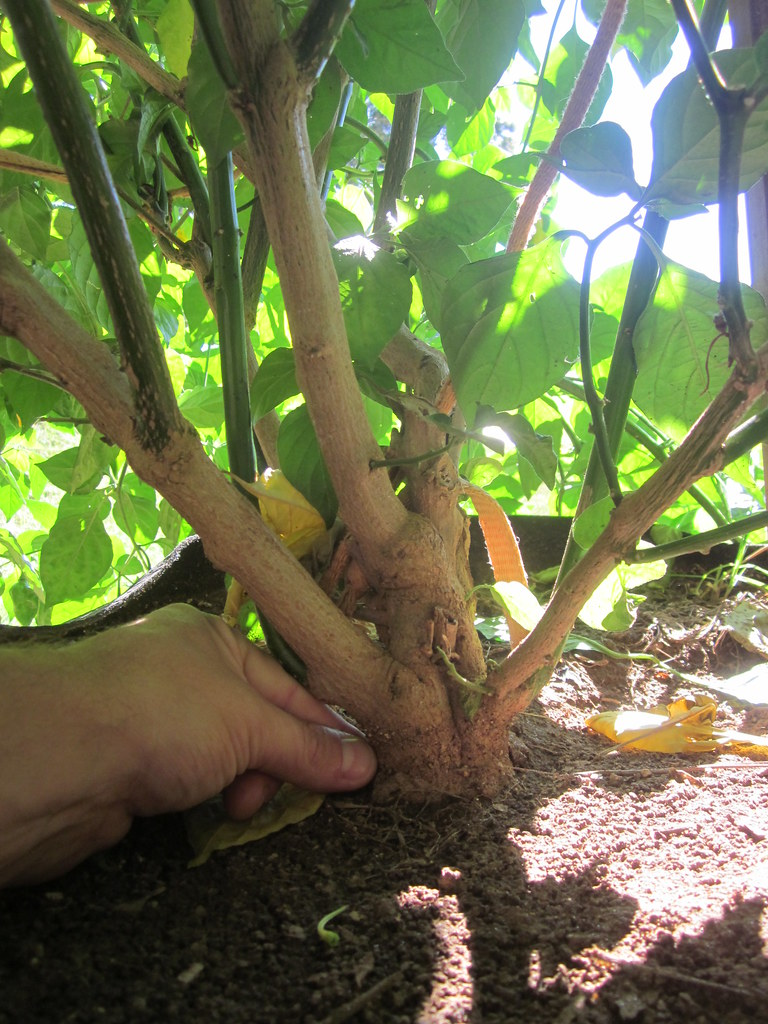
Yes, dormant buds can activate. Yes, the plant can regrow. But regrowth takes time and resources. Meanwhile, a vigorous seed-grown plant is already developing an expansive canopy full of fresh, green, new growing points.
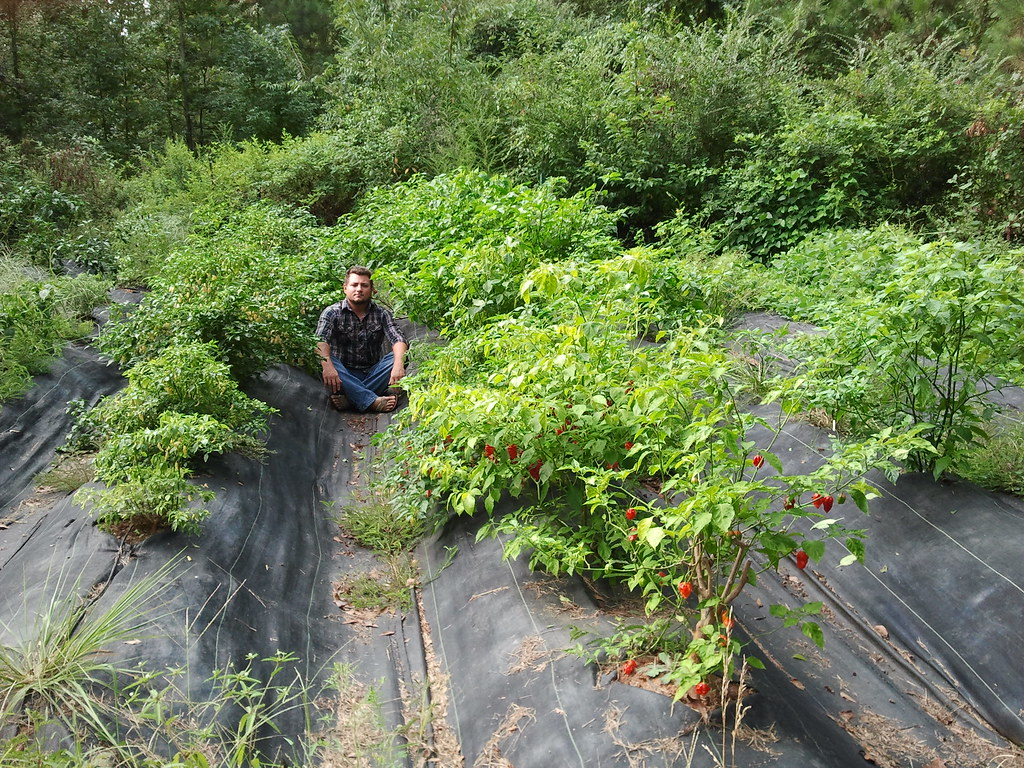
The question isn't how old the plant is, how thick its trunk has become, or how many branches emerge after pruning.
It's how quickly that plant can develop and sustain the photosynthetic capacity and flowering sites necessary to produce a substantial harvest.
And under optimal conditions, young pepper plants can do that remarkably fast.
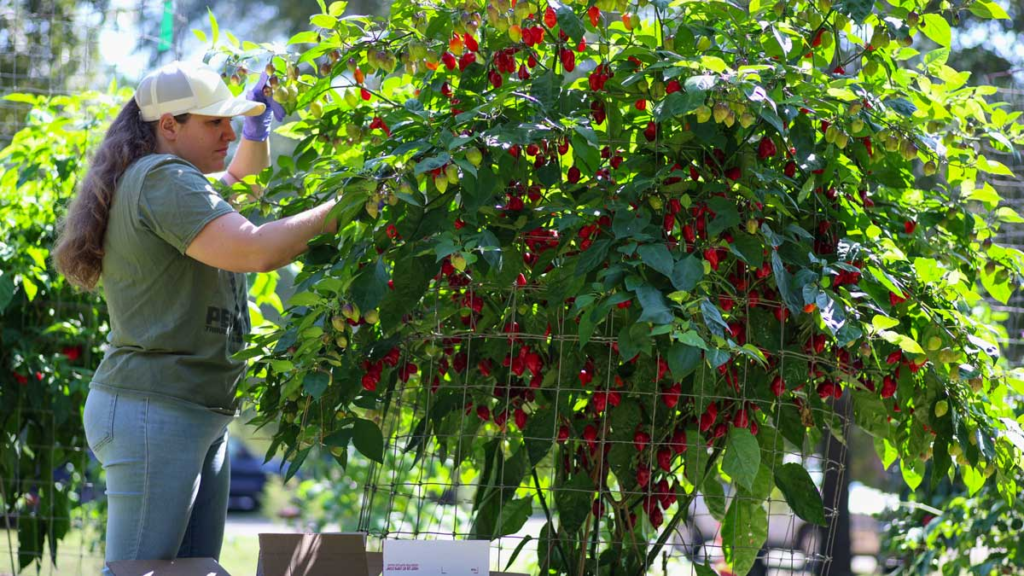
I've seen this same misconception surrounding topping and pruning. Growers remove the main growing tip, watch lateral branches develop, and conclude that pruning made the plant more productive.
But what if you never needed to remove that growing tip in the first place?
Give a young pepper plant sufficient light, balanced nutrition, and the right growing conditions, and watch what happens. Lateral branches develop naturally, internodes remain compact, and the plant builds an increasingly complex canopy without sacrificing its original growing points.
Topping can redirect growth, but that doesn't mean it creates more growth. Only providing the plants with more of the pepper growing fundamentals does that.
The same question applies to overwintering. Are we witnessing some inherent advantage of an older plant, or are we simply comparing it against younger plants that were never given the conditions to reach their full potential?
If you've never grown pepper plants like these in just four months from seed, how do you even have a frame of reference? And without that frame of reference, how can you claim you're making an accurate comparison?
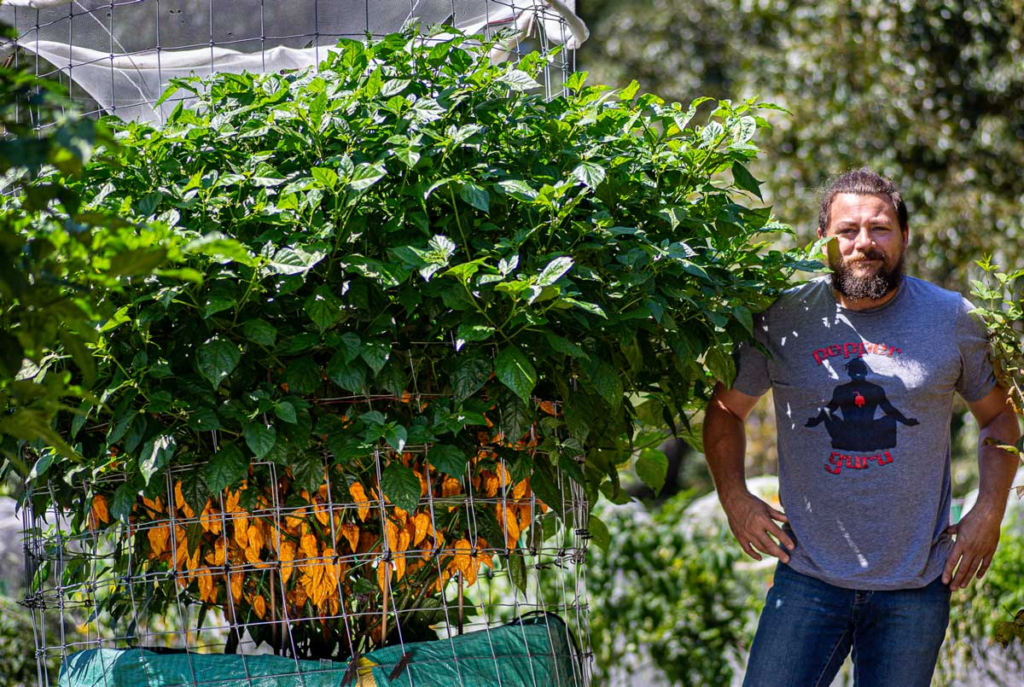
And it's not just me. Growers around the world are focusing on the fundamentals of pepper growing and getting jaw-dropping results, even in cooler climates with short growing seasons.
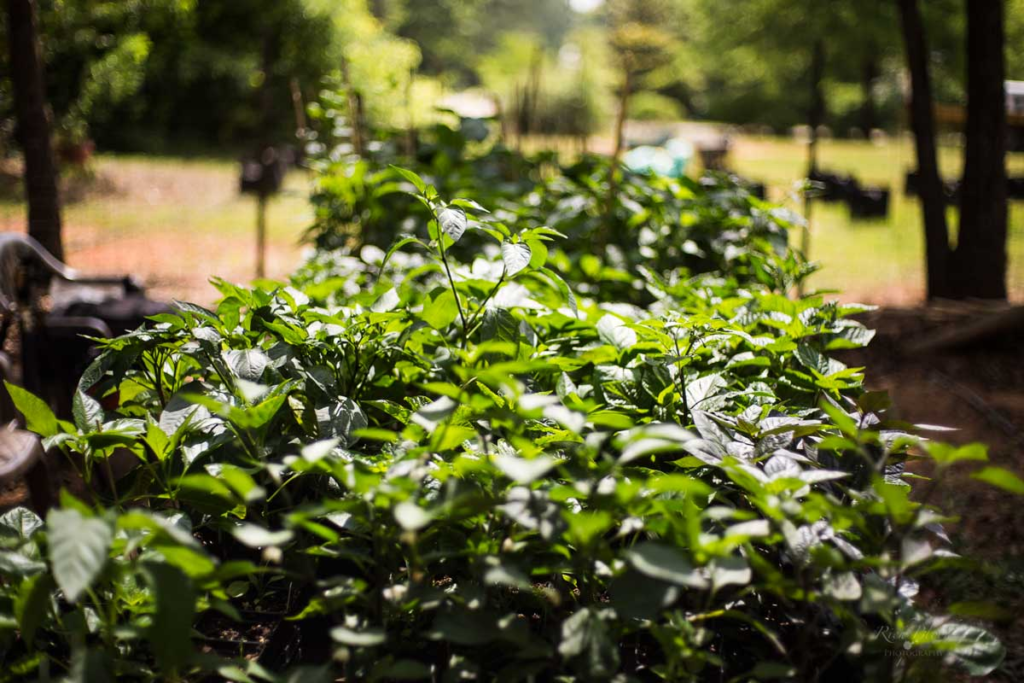
Take Brian Hamilton from Pomfret, Connecticut, for example. This legend harvested 23 pounds of peppers from a single five-month-old-from-seed Dorset Naga plant this year.
He's often waiting for the snow to melt before planting out in June, and his first hard frost can arrive in October. That's a brutally short growing season.
Brian used to overwinter his plants, too.
Not anymore.
The math isn't there. The peppers aren't there.
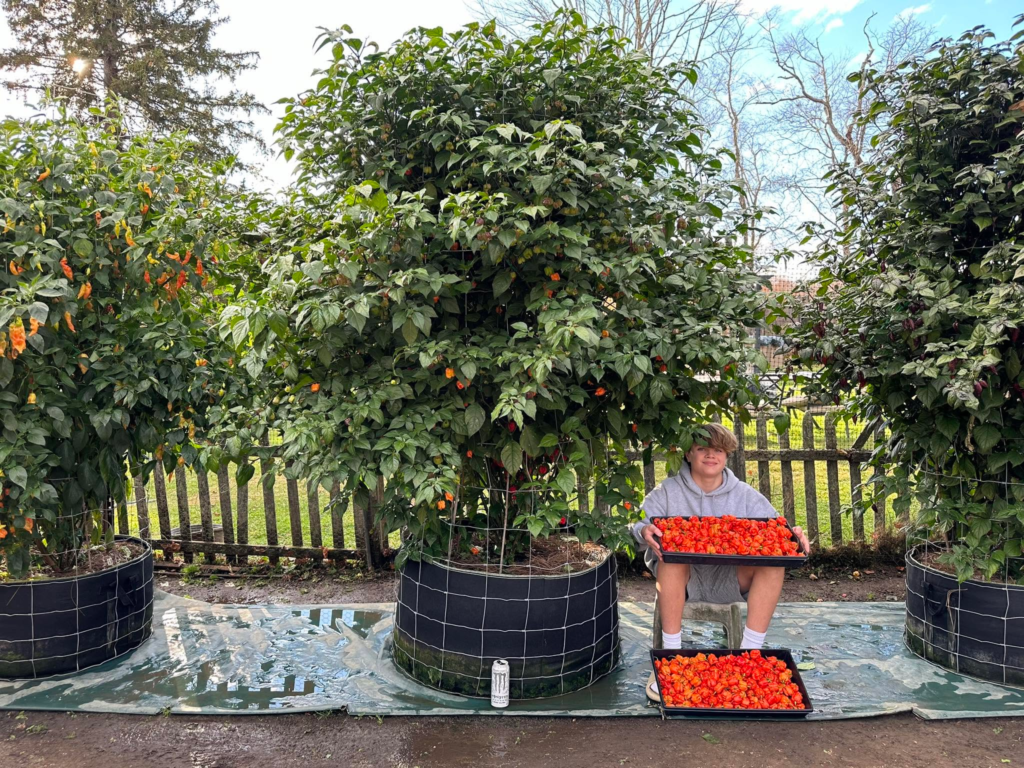
When I Still Overwinter
When I've got a difficult plant that hasn't performed well enough to produce a decent seed harvest, and my seed supply is running low, I'll bring it into the grow tent.
When I've got an incredibly rare wild Capsicum collection from South America, seeds are nearly impossible to obtain, and the plants are stubborn about setting fruit outside their native habitat, I'll bring those in, too.
But that's about it.
These days, only the plants I absolutely need to preserve come indoors. Not because I expect them to grow bigger, produce earlier, or yield more next spring.
I bring them in because I can't afford to lose them.
There's a big difference.
The Final Verdict: Grow Smarter, Not Necessarily Older
I don't regret writing that guide back in 2011. Not one bit. Overwintering taught me a tremendous amount about these plants, their resilience, and just how much punishment they can take and still come back swinging.
But fifteen years of growing, experimenting, failing, and questioning what I thought I knew have changed my perspective.
Back then, I was fascinated by how long I could keep a pepper plant alive. Today, I'm far more interested in how much I can get one to accomplish in a single growing season.
And that's really the point of this entire article.
If you want to preserve a rare plant, maintain a particular phenotype, or simply enjoy the challenge of keeping peppers alive through winter, by all means, overwinter them. My original guide is still there, and the methods still work.
But if your goal is bigger plants, earlier harvests, and more peppers, don't assume keeping last year's plants alive is giving you an advantage. You might be surprised by what a fresh seedling can accomplish when you stop holding it back.
Give it the light it wants. Feed it properly. Keep its roots healthy and its environment warm. Then get out of its way.
You don't need a three-year-old pepper plant to grow a monster.
You just need to learn how to grow one.
0 Comments